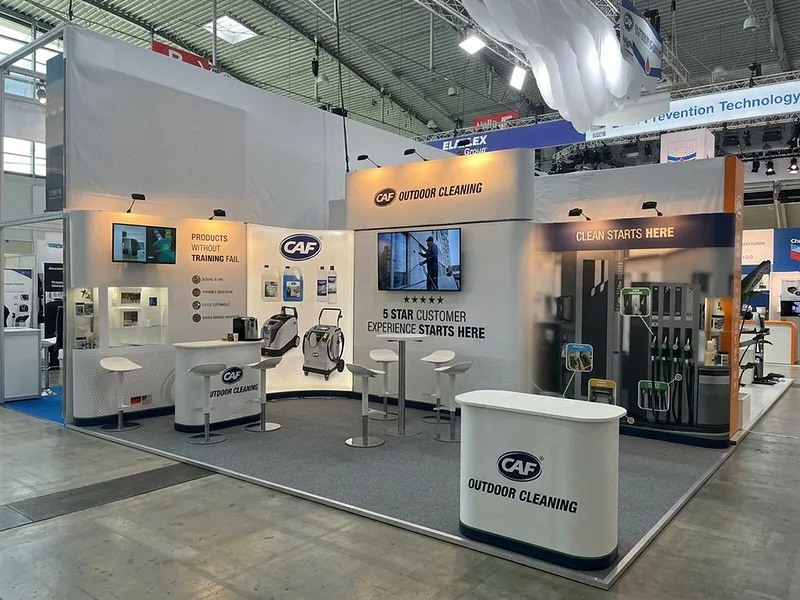

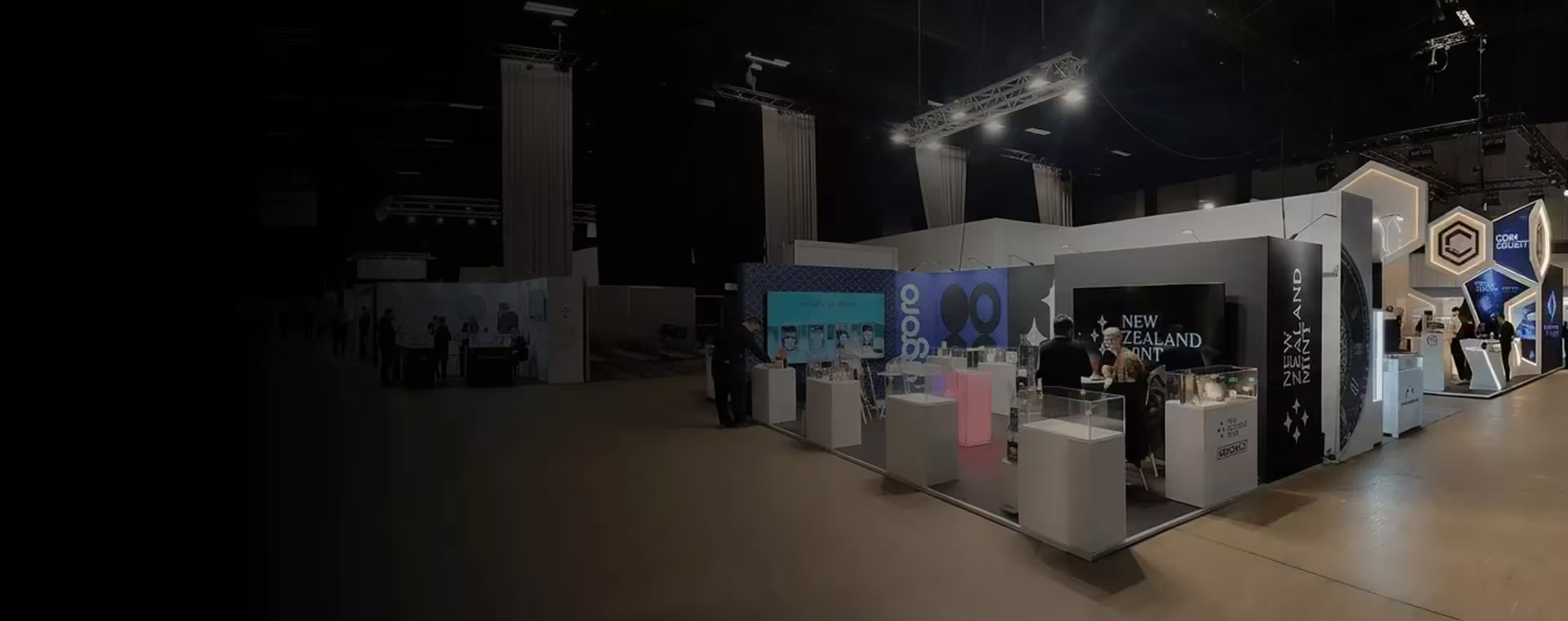
Exhibition stand design starts with understanding what your stand needs to do. You may want to demonstrate products, hold client meetings or host group discussions. Each activity needs its own space, and the layout has to make room for all of them without crowding visitors. On a busy show floor, your stand has to catch visitors’ eyes from the aisle and draw them inside.
Since 1979, Expo Exhibition Stands has helped exhibitors at European trade shows turn their exhibition stand ideas into custom stands. Our in-house design team starts by learning about your goals, brand guidelines, budget and practical requirements. They then plan how visitors will move through the space and what will catch their attention first. You receive 3D visuals of the design, so you can see how your stand will look and work before production begins.


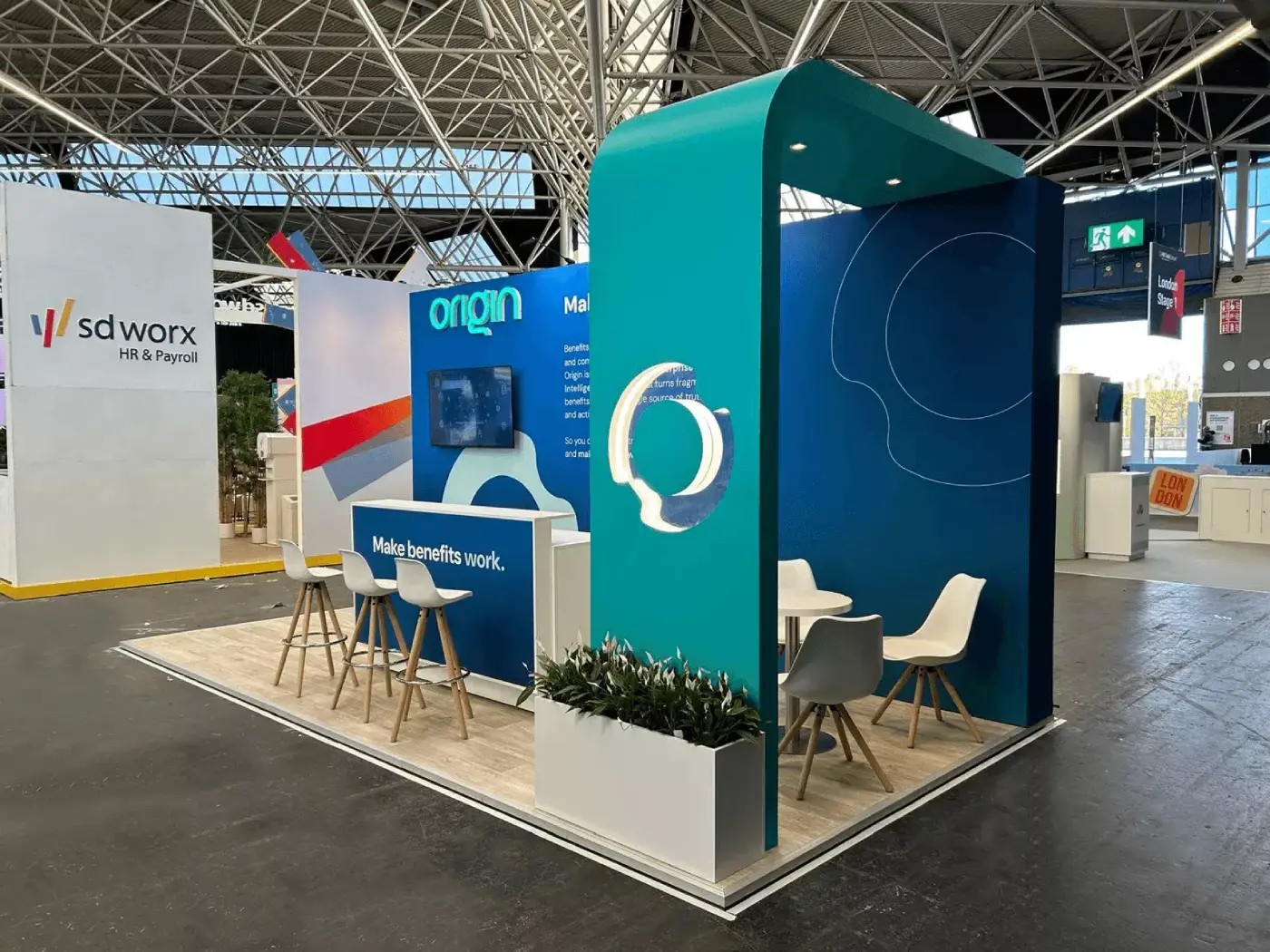




At major European trade shows, your stand shares the hall with many other exhibitors competing for the same visitors. A standard setup is easy to walk past. A custom stand lets you present your brand in a way visitors notice and remember.
Your stand also needs to suit how your team works and how visitors use the space. A product demonstration may need clear viewing space, while a detailed discussion calls for seating away from busy walkways. Floor spaces vary in size and shape from venue to venue, and bespoke exhibition stand design helps you balance these needs within the space you have.
Custom design also lets you adapt your stand to the market you are exhibiting in. Your messaging, layout and hospitality areas can reflect the visitors you expect at a show in Germany, France or the Netherlands, instead of repeating one setup at every event.
When you design an exhibition stand around your priorities, each activity gets the room and visibility it needs. An open demonstration area invites visitors to stop and explore. A well-placed meeting space supports conversations without blocking the entrance. Together, these choices help your team present your products or services and welcome visitors comfortably.
Your exhibition stand should introduce your brand before the first conversation begins. Exhibition stand design brings your colours, fonts, images and messages together so visitors can recognise your company at a glance. A clear headline tells visitors what you offer before they enter the stand, while product graphics give more detail as they approach.
Placement matters as much as content. A logo positioned high on the stand, and visible from more than one aisle, tells visitors who you are from a distance. Where venue height rules allow, tall structures, backlit walls or hanging banners help people find your stand across a crowded hall.
Materials and finishes should reinforce that identity. You might carry a distinctive product shape into a display counter, or use lighting to highlight the craftsmanship of your products. Demo counters and interactive displays let visitors experience your products rather than only read about them. Your brand guidelines are the starting point, with room to develop exhibition stand ideas that make your brand recognisable in a physical space.

We discuss what you want to achieve, who you want to reach, your brand guidelines and stand size. We also confirm what your team needs to do within the space.
Our designers explore layouts, display positions and stand features. They plan how visitors will enter and move through the space.
We turn the agreed concept into a detailed 3D design so you can review the layout, materials and graphics before production.
We review your feedback and agree on changes to the layout, displays and other stand features.
You review the final 3D visuals and design specifications before approving the stand for production.
Sustainable exhibition stand design considers what happens to your stand after the
show, as well as how it looks during the event. Planning for reuse from the outset
can reduce discarded materials and the need to make replacement components for
future exhibitions.
We are a member of Better Stands by NZCE, a programme that encourages
exhibitors to move from single-use stands to reusable ones. Stands are assessed at
the show on how many of their elements are reused, from the structure to the
graphics.
Modular frames, wall panels, flooring and ceiling elements can be reconfigured for different stand sizes and layouts, so the core structure is used again at your next show.
Fabric and panel graphics can be swapped when your message or event changes, without replacing the frame behind them.
Counters, display units, lighting and AV equipment can be planned to be reused across several events instead of being sourced again for each one.
See over 1000 stand designs with prices for exhibition stands across Europe.
Select City
Exhibition Stand size

MantaMesh's stand at LogiMAT in Stuttgart featured touchscreen displays that enabled visitors to explore solutions, technical specifications, and digital content through an engaging, self-guided experience.
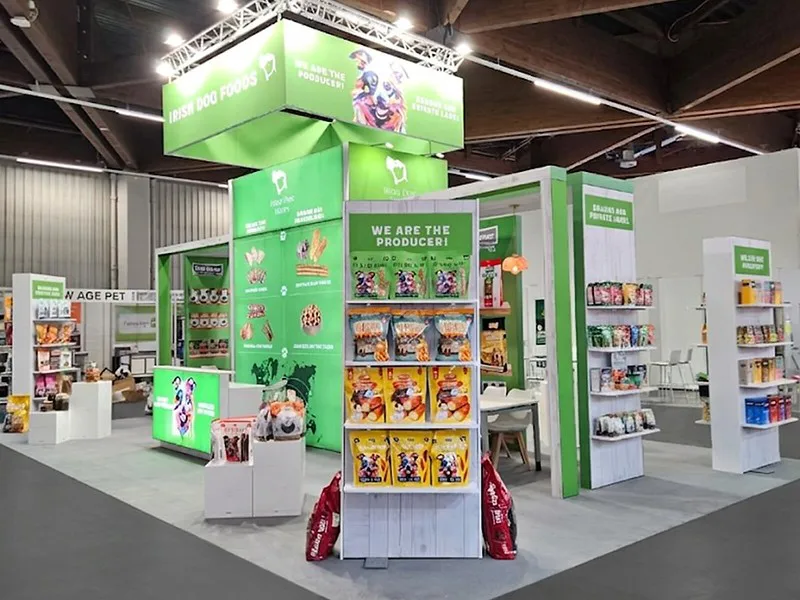
For Irish Dog Foods’ 71.5 sqm stand at Interzoo 2026 in Nuremberg, we combined branded shelving with freestanding product displays, making the range easy to browse and giving visitors a closer look at individual products.

RCS showcased its solutions at IBC in Amsterdam using interactive lighting that highlighted key areas of the stand, enhanced the overall atmosphere, and helped guide visitors through the space.

A large LED wall served as the centrepiece of Smartest Energy's stand at E-world in Essen, displaying dynamic brand content and capturing attention from across the exhibition hall.
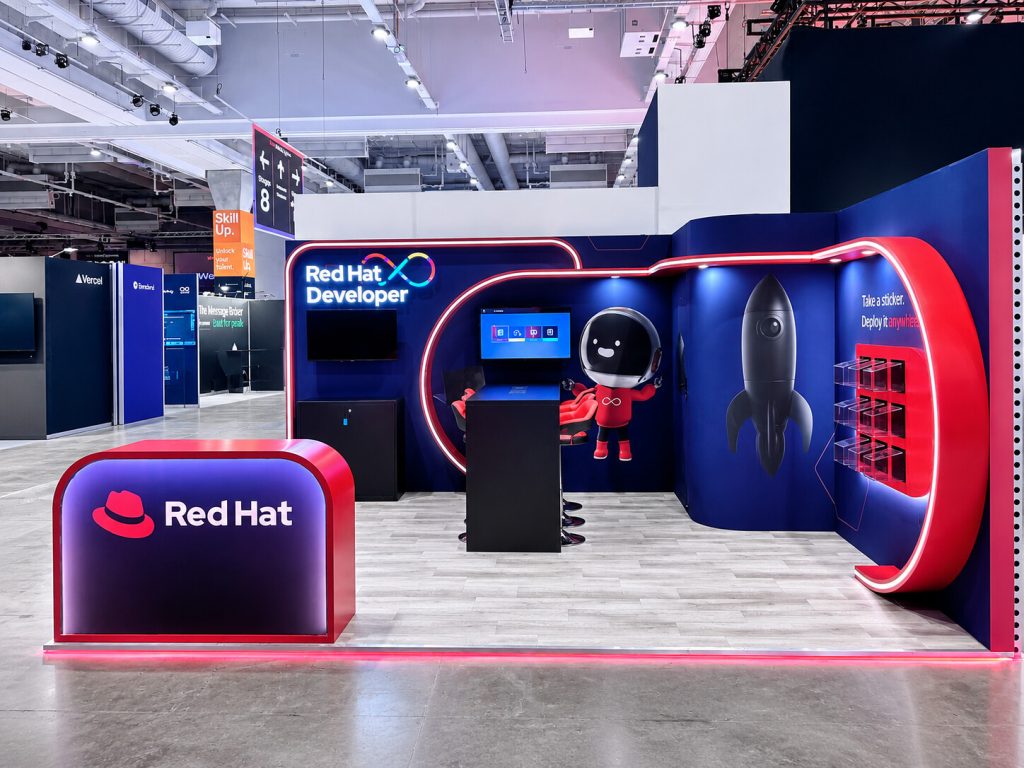
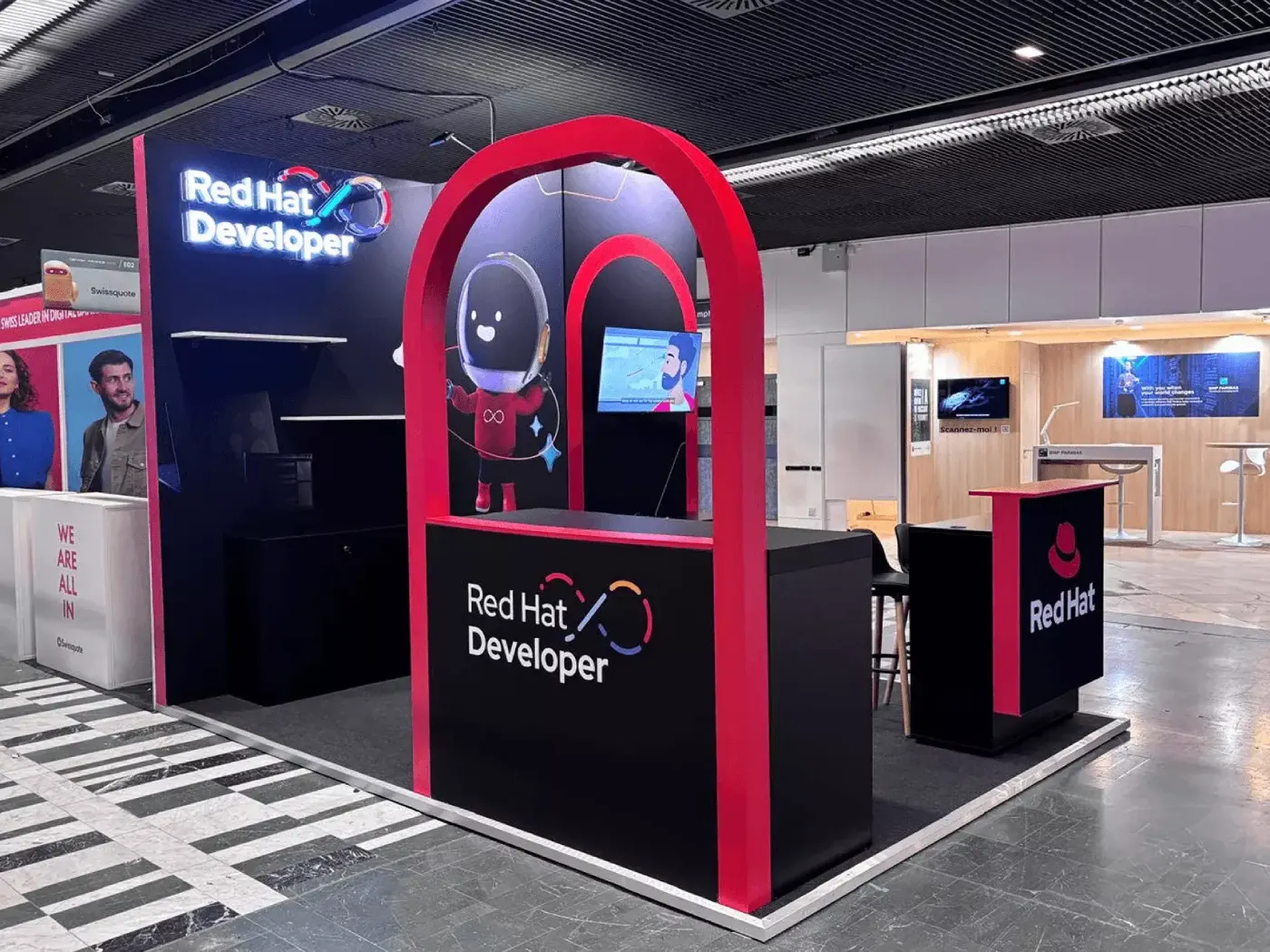
For Red Hat’s 20 sqm stand at WeAreDevelopers World Congress 2026 in Berlin, we designed a branded reception counter with rounded edges and illuminated red detailing, creating a clear welcome point that echoed the stand’s distinctive contours.
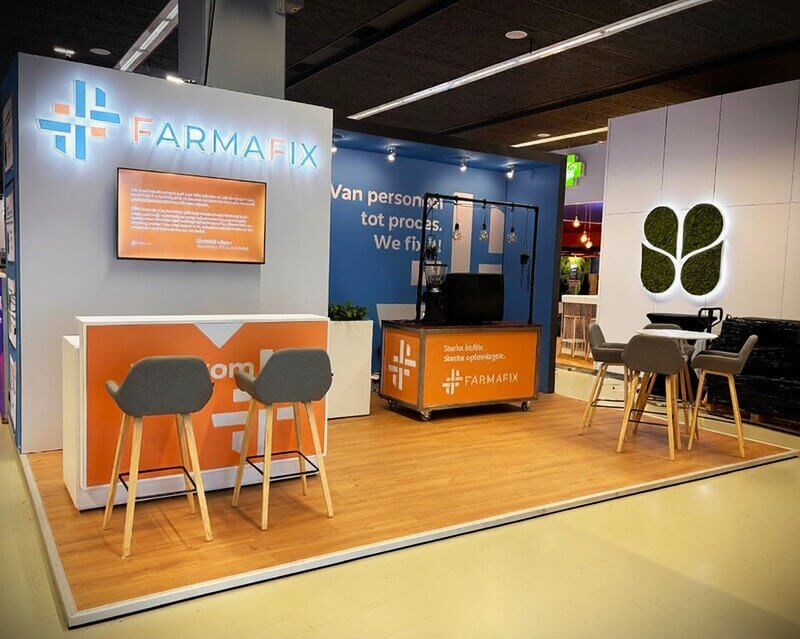

Our trade show booth was delivered beyond expectations at the KNMP Autumn Congress! From the very first contact to the final delivery, the collaboration was excellent – professional, flexible, and with great attention to detail....
Read More

I want to thank you for your support with our beautiful booth in Prague. For us it was the first time working with a booth building company and you were very helpful, thinking along with...
Read More

The communication was flawless and very efficient. The process was fast, and we quickly achieved our target. We felt the pricing was fair, the timelines were well-planned, and the construction phase was handled professionally. Everything...
Read More

The team demonstrated a clear understanding of our goals and translated them into a design that fully met our expectations. They listened closely to our input and provided valuable insights, ensuring the final concept aligned...
Read More

The Expo team quickly understood our needs and translated them into a design that aligned well with our brand and functional requirements. We were satisfied with the design phase—the 3D concepts were spot-on, and the...
Read More

Our experience working with Expo was very positive from the beginning. Communication was fast and efficient, and the team was exceptionally easy and friendly to work with. The design phase proceeded smoothly, and the 3D...
Read More

Working with you and your team was a true pleasure from start to finish, and I’d be glad to share how positive the experience was: From our very first conversation, your team quickly understood exactly...
Read More

We had a truly excellent experience working with Expo Exhibition Stands for our stand at in-cosmetics global 2025 in RAI Amsterdam. From the very beginning, the team demonstrated a deep understanding of our requirements and...
Read More

I’ll be using their services again! I recently used Expo Exhibition Stands for a B2B trade show in Germany (Kind + Jugend) and couldn’t recommend them enough. Throughout the whole process they were efficient, responsive...
Read More

Working with Expo Exhibition Stands Group Europe was an excellent experience from start to finish. They fully understood our requirements and brought our ideas to life with a spot-on 3D design. The entire process was...
Read MoreStay updated with the latest insights, trends and stories from the world of exhibitions.

Every exhibition stand begins as an idea. Before materials are ordered or production starts, that idea needs to be tested, refined, and approved. A 3D...

Exhibition stand design tips can help you create a stand that attracts attention, communicates your brand, and supports your exhibition objectives. Good design is not...

How to design an exhibition stand starts with defining what you want to achieve at the event. From there, every decision, including the layout, branding,...


